
Many housing society committees believe that once the Annual General Meeting is completed, the documentation is just a formality. In reality, AGM documents form the backbone of compliance, financial transparency, and long-term governance. Small mistakes in these documents often remain unnoticed until they turn into serious society audit issues or legal complications.
Question: Why do mistakes in AGM documents create long-term problems in a housing society?
Answer: Mistakes in AGM documents create long-term problems because they affect compliance records, financial transparency, and the validity of decisions. Errors in minutes, financial statements, or approvals can lead to audit objections, disputes, and governance failures in a housing society.

1. AGM Documents Are Not Records, They Are Legal Proof
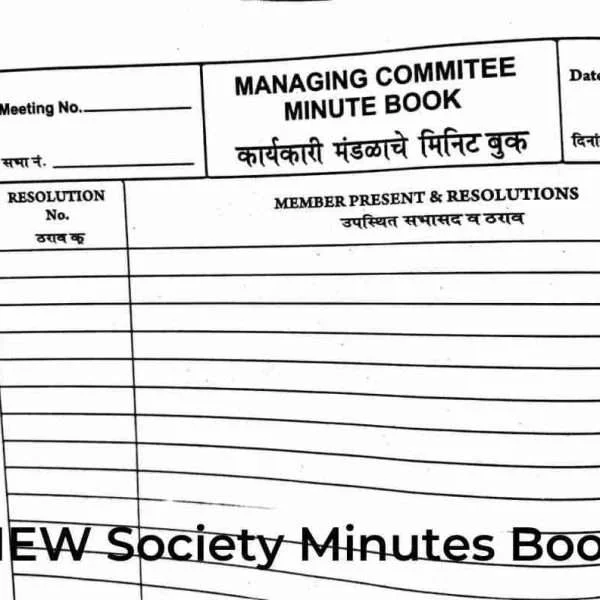
In every housing society, AGM documents are treated as routine paperwork rather than legally binding records. However, these documents are the only formal proof of decisions taken by the managing committee and members. Whether it is approval of budgets, appointment of auditors, or major repair decisions, everything relies on documented accuracy. When errors creep in, such as missing resolutions or incorrect financial reporting, the entire decision-making process becomes questionable. Many housing societies face situations where members later dispute decisions simply because the documentation lacks clarity. Platforms like BlockPilot help societies bring structure to documentation so that decisions remain enforceable and traceable over time.
2. Housing Society Accounting Mistakes Start at the AGM Level
One of the most overlooked realities is that housing society accounting mistakes often originate from AGM documentation itself. Financial statements presented during the AGM must align with actual records, but inconsistencies between reports and books are common. Incorrect carry-forward balances, unapproved expenses, or misclassification of funds may go unnoticed during the meeting. These errors then become part of official records, making them difficult to correct later without triggering society audit issues. This is where accounting errors in housing societies India begin to surface. BlockPilot enables verification layers and structured financial workflows, helping committees understand how to avoid audit problems in societies before they escalate.
3. Governance Breakdowns Due to Poor Documentation Practices
Strong governance in a housing society depends on clarity, consistency, and accountability. AGM documents act as the foundation of this governance structure. When documentation is incomplete or ambiguous, it creates gaps that affect decision continuity. For instance, if redevelopment discussions are recorded without clear resolutions, future committees may struggle to interpret past decisions. This leads to repeated discussions and delays. Over time, governance weakens not because of lack of effort but due to lack of structured documentation systems. BlockPilot addresses this gap by aligning documentation practices with real execution needs, ensuring continuity across committee transitions.
4. Impact on Redevelopment and Major Projects
Redevelopment is one of the most critical phases for any housing society, and AGM documents play a decisive role in this process. Every step, from feasibility studies to developer selection, depends on properly recorded approvals. When documentation is weak, it creates legal and operational risks. Developers and consultants rely on AGM records to validate decisions, and inconsistencies can delay or derail projects. Many housing societies have experienced redevelopment delays due to missing or unclear records. Structured documentation supported by systems like BlockPilot ensures that every approval is properly recorded, reducing risks and improving execution clarity.
5. Society Audit Issues and Compliance Risks
Society audit issues often emerge when AGM documents fail to align with statutory requirements. Auditors depend heavily on AGM records to verify compliance, and any mismatch between documented approvals and actual practices raises concerns. Common problems include unapproved expenses, missing reports, or discrepancies in maintenance charges. These issues increase compliance risks and can lead to penalties. Understanding how to avoid audit problems in societies requires integrating documentation with accounting and compliance processes. BlockPilot helps housing societies streamline these connections, reducing errors and improving audit readiness.
6. The Hidden Cost of Documentation Errors
AGM document mistakes may seem small initially, but their long-term impact is significant. Incorrect records lead to repeated corrections, legal consultations, and administrative delays, increasing operational costs. Resolving accounting errors in housing societies India often requires revisiting past records and conducting additional audits. This consumes time and resources. Beyond financial costs, documentation gaps reduce transparency and create mistrust among members. This affects participation and slows down decision-making. A structured approach, supported by platforms like BlockPilot, helps eliminate these inefficiencies and builds confidence within the society.
7. Building Structured Systems to Prevent Errors
The solution lies in moving from reactive documentation to structured systems. Housing societies need standardised formats, pre-AGM verification processes, and consistent record-keeping practices. AGM documentation should not be treated as a yearly activity but as part of an ongoing governance framework. Societies that adopt structured systems experience fewer audit issues, better governance, and smoother project execution. BlockPilot brings together decision-making, documentation, and execution into a unified approach, helping committees operate with clarity and control.
Conclusion
AGM document mistakes are not isolated problems. They are early signs of deeper gaps in governance, compliance, and financial management within a housing society. What begins as a small documentation error can grow into audit objections, redevelopment delays, and operational confusion. The issue is not the effort of managing committees but the absence of structured systems that ensure accuracy and accountability. Housing societies that shift towards organised, process-driven documentation with solutions like BlockPilot are better equipped to manage complexity, maintain transparency, and execute decisions with confidence.
#HousingSociety #GovernanceMatters #SocietyAudit