
Many housing societies across urban India face rising electricity bills, increasing maintenance costs, and growing pressure to manage finances efficiently. Yet one valuable asset often remains overlooked: the rooftop. While committees regularly discuss maintenance budgets, reserve funds, and infrastructure upgrades, the same buildings often leave thousands of square feet of rooftop space completely underutilised. Far more than an unused open space, a rooftop can become a source of clean energy that helps reduce common area electricity expenses, strengthens long-term financial planning, and supports future infrastructure. As energy costs continue to rise, housing society committees should no longer view rooftops merely as maintenance spaces. They should recognise them as strategic assets capable of delivering long-term financial and operational value.
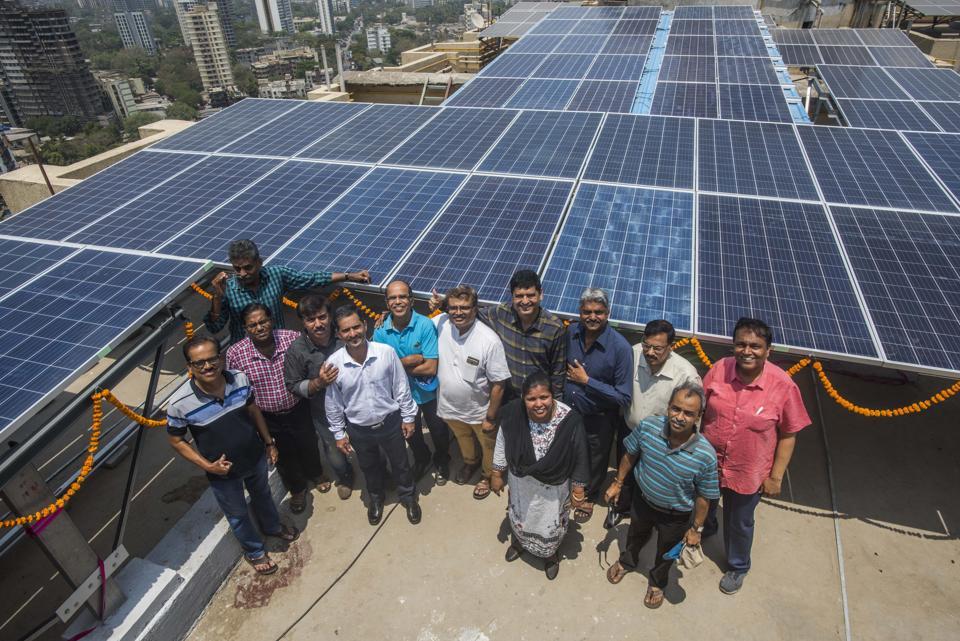
Why are housing society rooftops considered hidden energy assets?
Unused rooftops can be transformed into productive infrastructure through rooftop solar installations, helping generate electricity for common areas such as lifts, water pumps, corridor lighting, security systems, and clubhouses. Besides lowering electricity expenses, rooftops can also support future initiatives such as EV charging, battery storage, and other sustainability projects.
1. Housing Society Rooftops Are No Longer Just Empty Spaces
Traditionally, rooftops were used only for water tanks, mobile towers, antennas, or occasional maintenance access. Today, they represent an opportunity to improve operational efficiency and reduce recurring expenses. Electricity consumption in residential societies has steadily increased due to lifts, water pumps, CCTV systems, security infrastructure, lighting, and other common facilities, while maintenance collections often struggle to keep pace with rising operating costs. For many societies, particularly older buildings and those planning redevelopment, unused terrace space represents an opportunity that has remained untapped for years. Rather than allowing valuable roof space to remain idle, committees can evaluate whether it can contribute to reducing long-term operating costs. Forward-looking housing societies are beginning to view rooftop planning as an important part of financial sustainability, infrastructure planning, and long-term asset management.
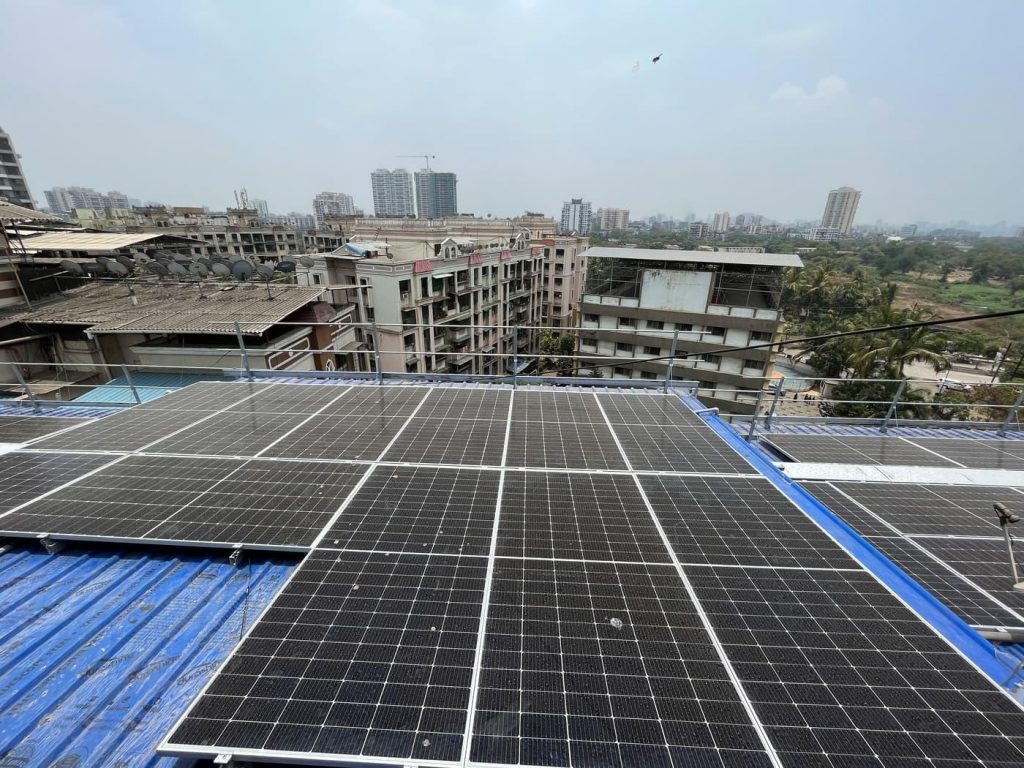
2. Rooftop Solar Can Significantly Reduce Common Area Electricity Costs
One of the most effective uses of an unused rooftop is the installation of a solar power system. Electricity generated through rooftop solar can be used to power common facilities such as lifts, water pumps, corridor lighting, security cabins, clubhouses, and administrative offices. This reduces dependence on grid electricity and lowers monthly common area electricity bills. For example, a medium-sized housing society with two or three lifts, water pumps, CCTV systems, common lighting, and a clubhouse may spend several lakhs annually on common area electricity. Even if rooftop solar offsets only part of this consumption, the cumulative savings over the life of the system can be substantial. The money saved can be redirected towards building repairs, reserve funds, infrastructure upgrades, or future redevelopment planning. Beyond the financial benefits, solar energy also reduces dependence on conventional power sources, lowers society’s environmental footprint, and contributes to cleaner, more sustainable urban living.
3. Energy Planning Is Now a Governance Decision
Installing rooftop solar is no longer just an engineering decision. It is a governance decision. Society committees are increasingly expected to make informed choices about infrastructure, long-term budgeting, sustainability, and operational efficiency. Evaluating rooftop utilisation should therefore become part of annual planning discussions rather than an isolated technical project. Many housing societies begin discussions by comparing vendor quotations instead of first evaluating rooftop suitability, electricity consumption, structural readiness, and long-term objectives. A structured governance process ensures that technical feasibility is established before procurement decisions are made. This reduces execution risks, improves transparency, and leads to better long-term outcomes.
Before proceeding with any solar project, committees should evaluate:
- Structural stability of the building
- Available shadow-free rooftop area
- Current common area electricity consumption
- Future redevelopment plans
- Estimated return on investment
- Operation and maintenance responsibilities
- Selection of experienced installation partners
- Compliance with applicable regulations
Common Committee Mistake
Many committees request quotations before confirming whether their rooftop is technically suitable for solar installation. Without a proper feasibility study, vendor comparisons are based on assumptions rather than actual building conditions, making it difficult to evaluate proposals objectively. A structured evaluation helps societies maximise long-term value while avoiding costly implementation mistakes.
4. Rooftops Can Support Much More Than Solar Panels
Solar power is only one part of the opportunity. As residential infrastructure continues to evolve, rooftops can support future-ready initiatives such as EV charging infrastructure, battery energy storage systems, smart energy monitoring equipment, rainwater harvesting infrastructure, green roofing initiatives, and renewable energy expansion. For societies considering redevelopment, planning these possibilities early allows new buildings to integrate sustainable infrastructure from the design stage itself. Future redevelopment plans should always be considered before finalising a rooftop solar investment so that today’s decisions remain compatible with tomorrow’s infrastructure. Instead of viewing rooftops as unused spaces, committees should recognise them as long-term infrastructure assets capable of supporting multiple sustainability initiatives over the coming decades.
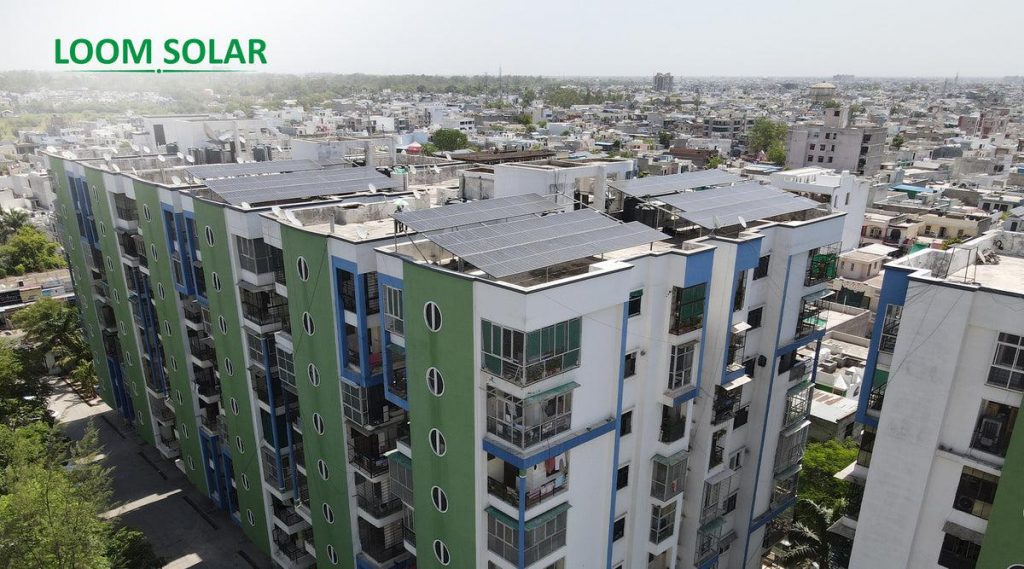
5. The Real Challenge Is Planning
Thousands of housing societies across India already possess the space needed to reduce energy costs. What many lack is a structured process to evaluate and utilise it effectively. As electricity tariffs continue to rise and sustainability becomes increasingly important, committees that begin planning today will be better positioned to manage future operating costs. Every rooftop represents an opportunity to improve efficiency, strengthen financial resilience, and increase the long-term value of the property. The question is no longer whether housing society rooftops have value. The question is whether societies are ready to unlock the value that has been sitting above them all along.
Decision-Making Checklist for Housing Society Committees
Before approving a rooftop solar project, the Managing Committee should complete a structured feasibility review. The objective is not simply to install solar panels but to ensure that the investment aligns with the building’s technical condition, financial priorities, and future plans.
- Structural capacity of the building
- Available shadow-free terrace area
- Current common area electricity consumption
- Future redevelopment plans
- Expected return on investment
- Government incentives and net-metering policies
- Installation partner credentials
- Long-term maintenance responsibilities
- Estimated maintenance costs over the system life
- Future expansion possibilities
A detailed feasibility study by a qualified structural engineer and an experienced solar consultant helps ensure that the project delivers maximum financial, technical, and operational benefits.
Conclusion
Unused rooftops are no longer simply vacant spaces above residential buildings. They represent an opportunity to reduce operating expenses, improve energy resilience, and strengthen long-term financial planning. The issue is not whether housing societies have rooftop space. Most already do. The issue is whether committees recognise its long-term financial value before rising electricity costs continue reducing operational flexibility. Housing societies that evaluate rooftop solar today are not simply investing in renewable energy. They are strengthening financial resilience, improving operational efficiency, and preparing their buildings for the future. With proper planning, technical evaluation, governance, and execution, an unused rooftop can become one of the most valuable long-term assets a housing society already owns.
#HousingSocietyManagement #SolarForHousingSocieties #SustainableHousing #BlockPilot