Safety is the committee’s 1st job
Housing societies in Mumbai and other urban centres across India carry enormous responsibility. Managing day-to-day operations is one challenge; ensuring the structural safety of buildings is another. Committee members, secretaries, and chairpersons are legally and morally accountable for resident safety. One of the most critical tools in this responsibility is the structural audit, a comprehensive assessment of a building’s stability, integrity, and long-term health. Despite its importance, many societies delay or skip audits due to budget concerns, lack of awareness, or a belief that “nothing has happened yet.” This approach is risky. Structural failures are costly, disruptive, and sometimes catastrophic. BlockPilot.co helps committees access qualified auditors, understand reports, and plan timely interventions, ensuring safety and regulatory compliance.
1. Why Structural Audits Matter
Structural audits are not mere technical formalities; they are essential governance tools. They help detect hidden risks such as cracks, corrosion, and weakened foundations that are invisible to untrained eyes, prevent accidents through early identification of vulnerabilities, enable planned maintenance budgeting through prioritised repair recommendations, and ensure compliance with municipal regulations such as BMC mandates. Ignoring audits exposes societies and committee members to legal liability, financial loss, and reputational damage.
2. When Should Structural Audits Be Conducted?
Municipal guidelines and best practices recommend audit frequency based on building age. Buildings between 15 and 30 years old should undergo a structural audit once every five years, while buildings older than 30 years require audits more frequently, typically every three years. These timelines reflect the increasing vulnerability of ageing concrete, reinforced steel, and structural elements. Early detection significantly reduces both risk and long-term cost.
3. What Do Structural Audits Cover?
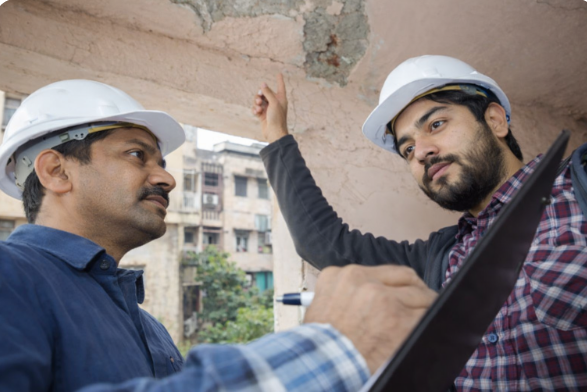
A comprehensive audit evaluates multiple aspects of structural safety and durability. This includes assessing concrete health for cracks, spalling, and weakening; evaluating corrosion of reinforcement bars that affect load-bearing capacity; checking the stability of columns, beams, slabs, and walls; and reviewing load conditions to identify the impact of modifications, extensions, or additional floors. Audit reports typically classify findings into repair priorities, allowing committees to distinguish between urgent, medium-term, and long-term actions.
4. Acting on the Report
An audit’s value lies in timely and correct action. Committees must review repair priorities carefully, engage only qualified and certified contractors, track repair completion with proper documentation, and communicate transparently with residents. Neglecting these steps compromises safety and exposes committee members to legal consequences under municipal and national regulations.
5. The Legal Dimension
Structural audits have clear legal implications. The BMC mandates periodic audits for buildings of certain ages, and committees are responsible for implementing recommendations. Ignoring critical repairs can lead to penalties or civil liability. Additionally, insurance claims for structural damage may be denied if audits were skipped or recommendations ignored. A structural audit is therefore not optional it is a governance obligation.
6. Common Pitfalls Committees Face
Even when audits are conducted, issues often arise due to selecting unqualified or non-empanelled auditors, delaying action until funds are available, poor record-keeping that obscures maintenance history, and underestimating repair costs, resulting in incomplete or repeated work. These risks can be reduced through structured processes, expert involvement, and disciplined documentation.
7. How BlockPilot Supports Committees
BlockPilot.co simplifies structural audits and follow-through by providing access to verified BMC-empanelled auditors, digitised and prioritised audit reports, structured vendor management for repair execution, timeline and budget tracking tools, and secure storage of all audit records, completion certificates, and compliance documents. This centralised approach improves transparency, reduces delays, and enables defensible decision-making.

8. Practical Tips for Committees
Committees should plan audits proactively based on building age, prioritise safety over short-term cost savings, engage qualified experts early, maintain detailed maintenance and repair logs, and educate residents about audit importance, costs, and timelines. These practices reduce risk while improving efficiency and resident confidence.
9. Governance Perspective
Structural audits function as governance instruments. Acting on findings demonstrates accountability, mitigates safety and legal risks, informs long-term repair and budget planning, and builds resident trust through transparency. Well-managed audits reduce emergencies, disputes, and reputational damage over time.
10. Closing Thoughts
Safety is the committee’s foremost responsibility. Structural audits are essential governance tools that protect lives, finances, and reputations. Delaying audits until visible damage appears may seem economical but exposes societies to far greater risk. Proactive audits, timely repairs, and transparent record-keeping fulfil legal obligations and member expectations. BlockPilot.co enables committees to move from reactive crisis management to proactive, data-driven governance, ensuring buildings remain safe, compliant, and structurally sound for years to come.